
8
Apr 2026
ISTO Americas Section Supports Capacity Building for Inclusive Tourism in Mexican Heritage Cities.
This training initiative, delivered online, aimed to strengthen technical capacities and raise awareness among stakeholders in the tourism sector to promote accessible and inclusive tourism in Mexican World Heritage Cities. The programme was aimed at public servants, tourism service providers and professionals working in the fields of tourism, culture and inclusion.
Over the course of five thematic sessions, participants addressed key topics such as:
- Introduction to social tourism
- Fundamentals of inclusive tourism
- Support for people with disabilities in the tourism sector
- Introduction to Mexican Sign Language
By the end, attendees had gained an understanding of the basic tools required to design more accessible, equitable and culturally responsible tourism experiences.
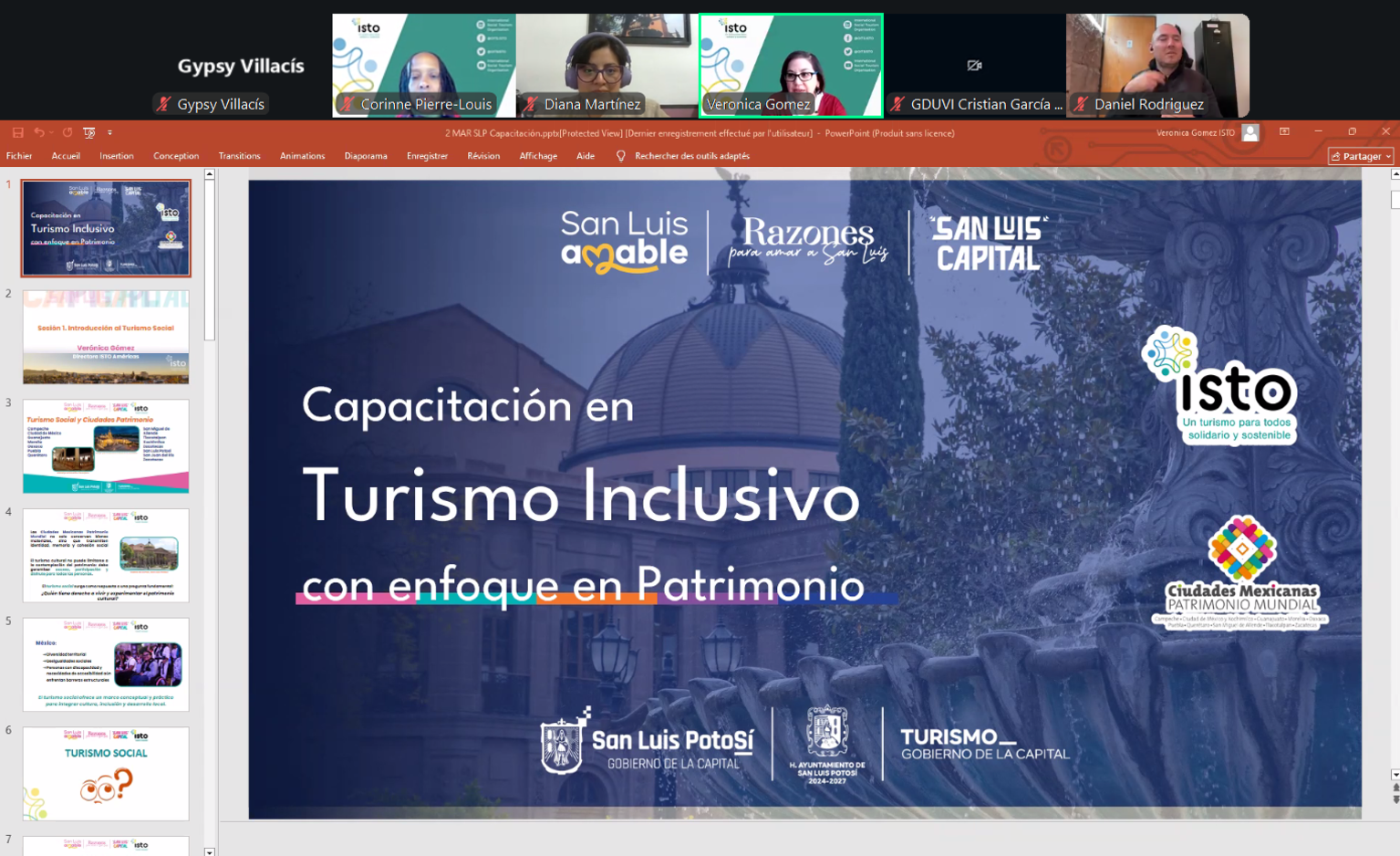
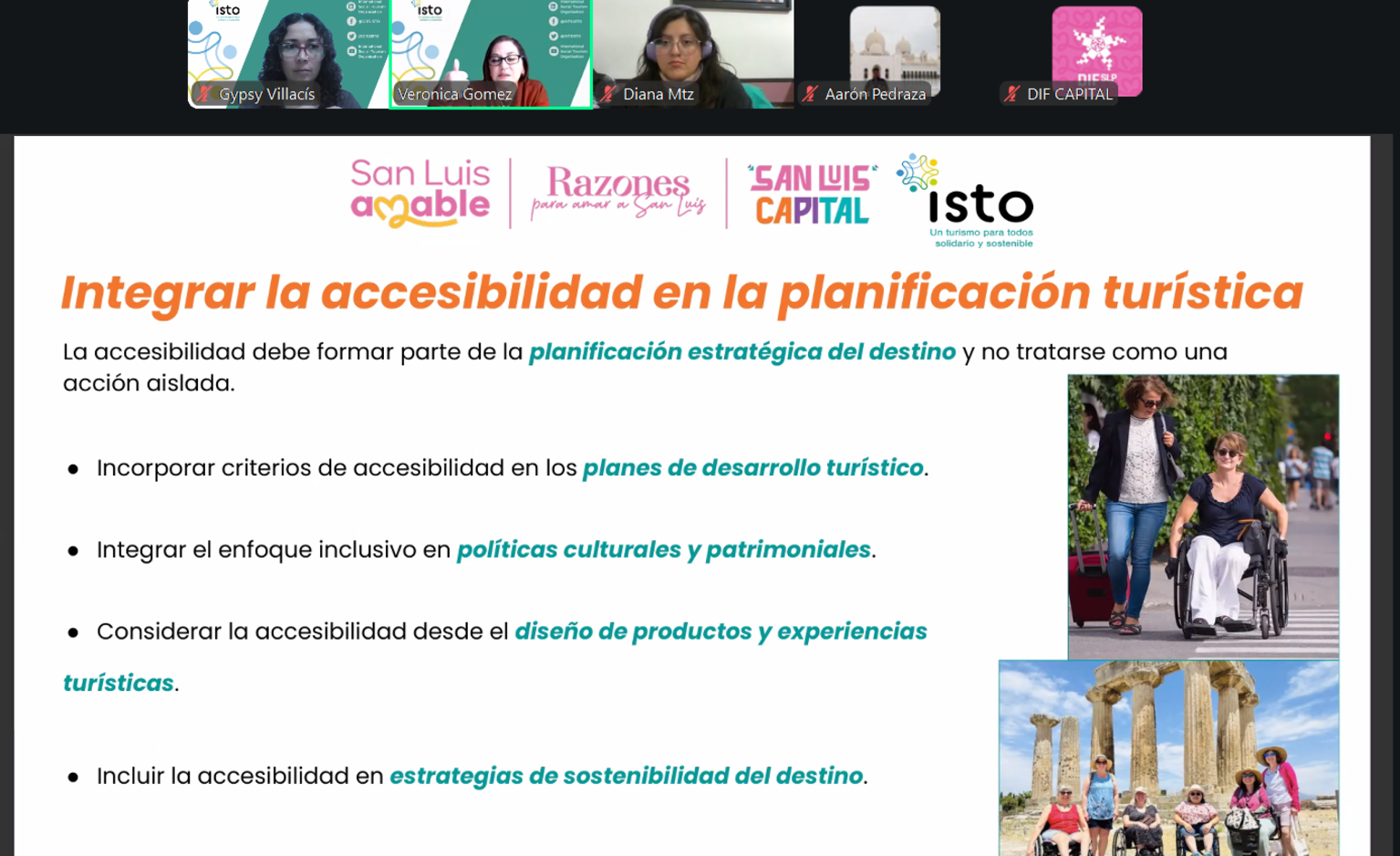
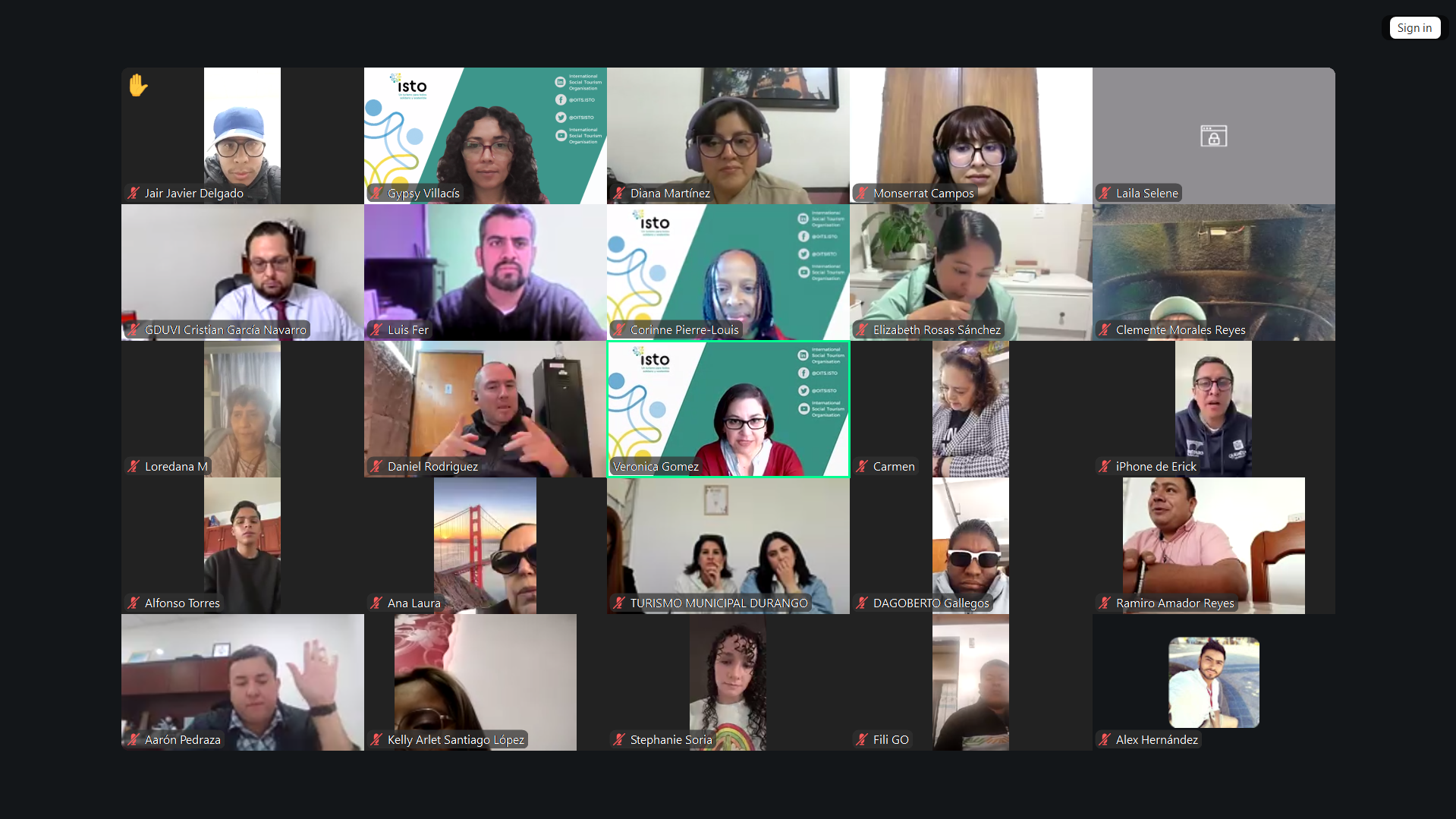
For ISTO’s Americas section, this event serves as a concrete example of how cooperation between local governments, heritage networks and international organisations can translate into training initiatives with a real impact.

”Supporting our members’ initiatives is a strategic priority for ISTO
Alberto López, president of the Americas sectionat the opening ceremony
For this reason, rather than simply supporting isolated events, ISTO seeks to strengthen local processes that help consolidate social tourism as public policy and as a territorial practice. When a heritage city commits to inclusion, it not only improves its tourism offering: it broadens access to the right to rest, leisure and cultural enjoyment for everyone. In the words of ISTO’s Director for the Americas, Verónica Gomez, the training in San Luis Potosí forms part of a broader regional agenda that promotes social, inclusive and sustainable tourism as a tool for social cohesion, local development and heritage enhancement.
In a context where World Heritage Cities are home to invaluable cultural wealth, moving towards accessibility is not an add-on, but a responsibility. Inclusion involves removing physical, communication and attitudinal barriers, but also transforming the way we conceive of the tourist experience.
The tourism sector’s current approach is to put people at the centre, prioritising their well-being from a humanistic perspective. Furthermore, it is important to highlight the significance of inclusive workplaces within the tourism sector, both for travellers and for deaf people, thereby promoting regional development and solidarity.
Inclusive destinations tend to be better organised; their raison d’être is based on respect and empathy in their approach, strengthening the identity and autonomy of people with disabilities for the benefit and enjoyment of everyone.
At ISTO, and in particular through our Americas section, we reiterate our commitment to continue supporting our members in Mexico and across the continent, building capacity, forging partnerships and promoting tourism as a right and a common good.
Because social tourism is not a destination: it is a path we build together.

Zoé Bertolin
08-04-2026